
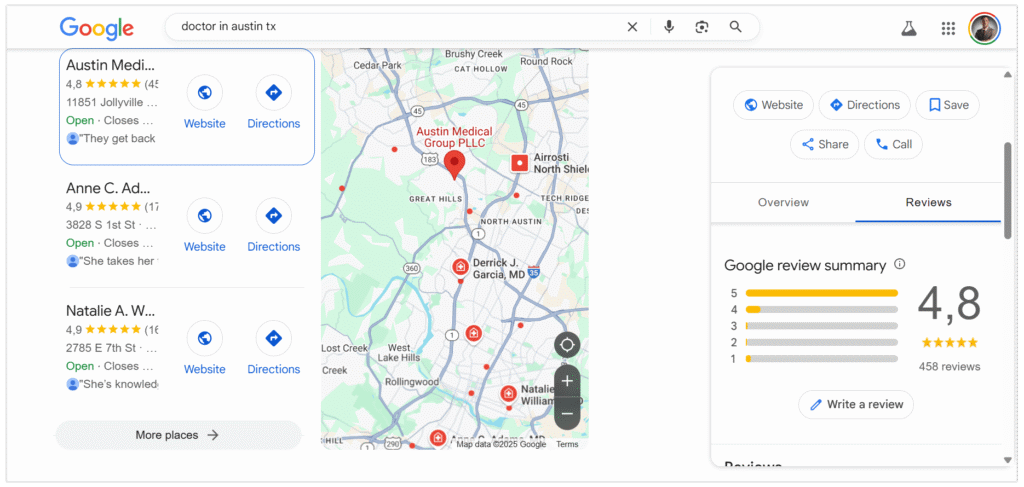
What Is Local SEO for Doctors?
Local SEO is the process of improving your clinic’s visibility for location-based searches. It helps Google understand:
Where your clinic is located
What medical services you offer
Whether patients trust your clinic
For doctors, local SEO mainly affects:
Google Maps rankings
“Near me” searches
Local search results on mobile phones
Unlike general SEO, local SEO focuses on patients who are ready to visit a clinic, not just read information.
Why Google Maps Ranking Matters More Than Ever in 2026
In 2026, Google Maps is often the first and last decision point for patients.
Most people:
Click on one of the top 3 map results
Call directly from Google
Check reviews before booking
If your clinic appears lower—or not at all—patients usually don’t scroll further.
This is why many small clinics that invest in local SEO are now competing successfully with large hospitals. In fact, smart local visibility is one of the reasons smaller practices can grow without massive advertising budgets, as explained in our post on how small clinics can compete with big hospitals through smart marketing.
Step 1: Optimize Your Google Business Profile Properly
Your Google Business Profile (GBP) is the most important factor for Google Maps ranking.
Focus on these key areas:
Clinic Name
Use your real clinic or doctor name
Avoid adding extra keywords unnaturally
Primary Category
Choose the most accurate category, such as:
Dental Clinic
Orthopedic Surgeon
General Physician
Gynecologist
Contact Details
Phone number and address must be correct
Use the same format everywhere online
Clinic Timings
Keep timings updated
Avoid showing “closed” during working hours
A well-optimized profile sends strong trust signals to Google.
Step 2: Use Local Keywords the Right Way
Keywords help Google understand what you do and where you do it.
Instead of broad terms, focus on location-based keywords, such as:
dentist near me
orthopedic doctor in Patna
child specialist in Muzaffarpur
ENT clinic near me
Use these keywords naturally in:
Google Business description
Website homepage
Service pages
Blog articles
Avoid forcing keywords. Content should sound like how a real doctor or clinic would explain things, not like an advertisement.

Step 3: Patient Reviews Are a Ranking Powerhouse
In 2026, reviews influence both:
Google Maps ranking
Patient decision-making
Clinics with more genuine, recent reviews almost always rank higher.
Practical tips:
Ask satisfied patients politely after consultation
Share the Google review link via WhatsApp
Respond to every review—positive or negative
Professional responses show Google that your clinic is active and trustworthy.
Step 4: Maintain NAP Consistency Everywhere
NAP stands for:
Name
Address
Phone number
Your clinic’s NAP must be exactly the same across:
Website
Google Maps
Practo, Justdial, Lybrate
Social media pages
Even small differences can confuse Google and reduce ranking strength.
Step 5: Your Website Still Matters for Google Maps SEO
Many doctors believe Google Maps works without a website. That’s only partly true.
In 2026, Google still checks your website to validate:
Clinic credibility
Location relevance
Service authenticity
Your website should:
Be mobile-friendly
Load fast
Have a clear contact page
Include an embedded Google Map
Adding city-specific service pages also helps strengthen local signals. If you’re building a long-term digital presence, combining website SEO with local strategies is essential for sustainable clinic growth.
Step 6: Use Local Directories & Medical Platforms
Local citations help Google confirm your clinic’s existence.
Important platforms include:
Practo
Justdial
Lybrate
Sulekha
Bing Places
Ensure all profiles use the same clinic details and correct category.
Step 7: Stay Active on Google Business Profile
Google prefers active clinics.
Post regularly about:
Health awareness tips
New services
Clinic updates
Festival or holiday notices
Even one post per week improves engagement and visibility.
Step 8: Support Google Maps Ranking with Local Blogs
Blogs help Google connect your clinic with your city and specialty.
Good blog examples:
“Best Orthopedic Treatments Available in Patna”
“When Should You Visit a Child Specialist?”
“How to Choose the Right Dentist in Muzaffarpur”
Educational blogs also build authority and patient trust over time.
Common Local SEO Mistakes Doctors Make
Ignoring Google reviews
Incorrect business category
Multiple Google listings for one clinic
Outdated website information
Depending only on paid ads
Avoiding these mistakes can give your clinic a strong local advantage.
How Long Does It Take to Rank on Google Maps?
Typically:
Initial improvement: 2–4 weeks
Strong visibility: 2–3 months
Results depend on competition, consistency, and patient engagement.
Final Thoughts
Local SEO for doctors in 2026 is no longer optional. Patients trust Google Maps, reviews, and local search results more than traditional advertising.
If your clinic is optimized properly:
You get consistent patient inquiries
Your brand trust improves
Marketing costs reduce over time
With the right local SEO strategy, even a small clinic can build strong visibility and compete confidently with larger hospitals.